
The Subconscious Identity Trap That's Keeping You From True Success
Oct 26, 2025
We've built a world where we've put the word "busy" on a pedestal like it's something we're striving to be.
But according to Steve Nagib, a mentor for modern professionals who spent over a decade optimizing professional athletes before diving into the full spectrum of human optimization, when busy is your main descriptive word for yourself as a human being, it's time to have a deeper conversation.
Because that four-letter word reveals something most high-achieving women don't want to admit: we're stuck in a loop. A beautiful, exhausting, soul-crushing loop where suffering equals success, money equals freedom, and our identity depends on never actually arriving.

In my conversation with Steve on the Modern Wellness Podcast, we unpacked subconscious patterns, explored how trauma shapes behavior in business, and discussed what it really takes to rewire your reality from the inside out. The insights were so profound that I've been processing them for weeks. And if you're someone who's ever felt like you're grinding toward success but losing yourself in the process, this conversation will change everything.
The Myth We're All Living
Steve started our conversation by addressing what he calls "the myth" that high-functioning, high-achieving individuals fall into: we equate suffering to success.
"I'm not allowed to have success. I'm not allowed to be a successful person. I'm not allowed to experience joy and fulfillment unless I grind my way to the top, unless I completely suffer and give everything up, including myself, in order to reach success. That narrative is one that I was a victim of for the majority of my life until a few years ago when I was like, this is bullshit. Why can't I enjoy getting to the quote unquote top?"
This narrative is everywhere. Hustle culture. Grind culture. Famous professional speakers telling people to pull all-nighters and skip family dinners to work at the office. Go back 50 years and it was factory workers being told to work really hard for 30 years to get a pension. Go back 400 years and it was "work really hard, go to war, and then you'll have freedom."
But here's what Steve made crystal clear: hard work and suffering are completely different things.
Hard work is understanding what it takes to get where you want to go and being willing to walk that journey. Suffering is understanding what it takes, not wanting to walk the journey, but forcing yourself to walk it anyway.
"If I don't want to walk the journey, let me pick a different destination. It's my life. I have the choice. Once I make the choice, then I'm obligated to walk that journey. But we all think we're supposed to be making specific choices to go to specific places. No one's telling you that. You've got your own map and your own compass. Walk your own journey."
Understanding Your Subconscious Operating System
To understand why we're stuck in these loops, we need to understand how our subconscious works and what role it plays in our lives.
We have three levels of consciousness: subconscious, conscious, and higher conscious. Our subconscious is analyzing around 40 million data points per second. It's controlling our heart rate, respiratory rate, every time we blink, every time we swallow saliva. All the involuntary things our body does to keep us alive is the responsibility of our subconscious.
The subconscious has one mission: keep you alive. In other words, keep you safe.
Our conscious mind is responsible for all of our wants: what we want to do in life, how we want to feel, what makes us comfortable. Our highest conscious is responsible for allowing us to experience joy and fulfillment. When we live inside our purpose, we're living in alignment with our highest self.
But here's where it gets interesting: your subconscious is also responsible for watching itself as closely as possible to your identity.
Human behavior is unpredictable. But if your subconscious can predict your behavior, it can keep you safe. So from the second you're born, your subconscious observes your conscious behavior and starts creating an identity. "Steve is this person and therefore is going to behave and act this way."
When you act outside of that identity (what Gen Z calls "off brand" or "that doesn't track for you"), you pose a threat to yourself. Your subconscious goes haywire trying to create distance from the unpredictable behavior to keep you safe.
"The subconscious doesn't give a shit about you living inside your purpose. Your subconscious could care less about you sacrificing and suffering for success. All your subconscious cares about is: we've picked an identity and we're going to stand on that identity because we can predict the conscious behavior inside of that box. As long as you stay in that box, we're safe."
This is why identity change feels so resistant. This is why shifting your mindset is so hard. Mindset is controlled by the subconscious, which only cares about safety.
The Hot Stove and Kitchen Sink Metaphor
Steve shared one of the most powerful metaphors I've ever heard about trauma and how we create stress in our lives.
Imagine you're five years old in your mom's kitchen. She tells you not to touch the hot stove. But you're an ambitious little chef, and you touch it anyway. You burn yourself, and you survive that event.
What's actually happened? You've suffered a traumatic event, and because you survived it, you've experienced trauma. But trauma isn't what most people think it is. Trauma is just a lesson we take from a traumatic environment and experience so that we don't have to endure that same pain again.
The lesson is super useful: don't touch hot things in the kitchen or you'll burn yourself. Only useful in that environment, though.
The next day, your mom is cooking and tells you to clean the dishes. But in your head, you're living in what Steve calls a "lowercase t truth." It's not true for your mom, but it's true for you right now: if I touch any more metal objects in the kitchen, I'm going to burn myself.
Your mom is living in capital T Truth: stoves are hot, sinks clean dishes. You're living in lowercase t truth: everything in this kitchen will burn me.
"I'm causing stress in my life by not doing the dishes and therefore experiencing post-traumatic stress. When you describe it that way and then apply it to war with veterans coming home, you're like holy shit. All they're doing is operating underneath the lessons they learned at war that were super useful in those environments but are no longer useful in civilian life."
This is what we're all doing. We're taking lessons that were appropriate in one environment (usually from childhood, when our subconscious was writing its operating system between ages 4-8) and applying them to different environments where those lessons are no longer appropriate.
The Identity Trap
Steve emphasized something crucial about identity that most people don't understand: as soon as you say "I am" something, you've put blinders on your entire life.
"I am a cancer survivor. I am Egyptian. I am tall. I am short. I am fat. As soon as we take a stance to say I am something, you have now put up blinders just like a horse running a race. You've put up blinders on your entire life and just put a massive limitation on the things that you're capable of."
The identity of the victim mentality comes from us being told, whether by ourselves or by other people, "I'm this, I'm supposed to act this way."
"I am and any other identity that we make up about ourselves, whether true or not, is exactly that: it's made up. So when people are like I am this, I can't do that. Well dude, it may be true that you're a cancer survivor, but you're also this and that and 98 other different things. Why are you choosing to only identify with the one thing that's keeping you stuck?"
The Money Trap: Why "Money = Freedom" Makes You a Slave
This is where everything Steve explained about subconscious patterns and identity came together in the most mind-blowing way.
We've been trained to view money as a measure of success. We equate suffering with having to work hard. We believe hard work gets us money. Money means success. Success means we can stop working.
But here's the trap: if we stop working, we might lose money. If we lose money, we lose success. And if we lose success, we lose our identity. And if we lose our identity, we're no longer safe.
"What we resist will always persist. If we think making a ton of money is what's going to bring us to success, and chasing success is what's going to keep us driven, then we will make sure at a subconscious level (we won't realize we're doing it) but we will make sure we never have enough money. Because if we did, we would be able to stop. And if we stopped, we would lose our identity. And if we lost our identity, oh shit, we're no longer safe."
Steve shared an incredible story about his friend Andrew Cordle interviewing Mike Tyson. Andrew asked Mike to fill in the blank: "Money is ___."
The most common answer people give is "freedom."
When Mike Tyson heard this, he got up out of his chair, started cracking up, got in Andrew's face because he couldn't believe anyone would say money equals freedom.
Once Mike settled down, he looked at Andrew and said: "That's a damn shame. Because everyone who thinks money is freedom will forever be a slave to money."
"As soon as we equate needing money to experience freedom, we become a slave to that very thing. That goes past money. As soon as we equate needing a car for having freedom, we are now being controlled by our car. If we associate needing a boyfriend or girlfriend or a spouse to experience joy and fulfillment, we've given up our freedom to needing somebody else in our lives. We've given up the ability or the fact that we are whole in and of ourselves."
Steve made a powerful claim: "I guarantee you, I haven't met a single person who released their need for money and didn't immediately become rich. I'm not talking about manifestation or energy work. I spent ten years working around professional athletes across all four major sports leagues, so I'm not very woowoo. And I'll tell you, I'm batting a thousand on watching people give up their need for something and immediately get it. It's just how the brain works."
The Power of Empathy and Understanding Different Lenses
One of the most profound shifts that comes from understanding how the subconscious works is a deeper level of empathy.
When you really start to understand how your own subconscious works, empathy takes on a whole new meaning. It's not just "put yourself in the other person's shoes." Because you can't. You have no history of living as them. You haven't experienced the same traumatic lessons they have.
The best you can do is be really curious and ask questions to try to gain a small understanding of what lens they're looking through.
"I'm looking through my lens. You're looking through your lens. It's impossible for us to ever switch lenses. It's impossible for me to look through yours or you to look through mine. But as long as we can acknowledge that there are two different lenses, we can move forward and collaborate in a way easier and better way."
This transformed how Cliff and I communicate with each other and lead together. Understanding each other's patterns and how we function individually has allowed us to come together more powerfully. We can see what lowercase t truths each of us is operating under and help each other recognize when we're applying hot stove lessons to kitchen sinks.
Can You Really Rewire Your Subconscious Operating System?
The question everyone wants to know: can we actually rewrite the operating system of our subconscious?
Steve's answer: "Absolutely. Is it easy? No. Is it common? No. But is it possible? Absolutely."
It takes introspective work. It takes starting to question everything. Steve's biggest blessing and curse is that he never stopped developing past the toddler stage in one specific way: he never stopped asking why.
"Toddlers always ask why. Why is the sky blue? Why do cars have four tires? Why do cats and dogs walk on all fours and humans walk on two legs? I started asking those questions around age two and I've never stopped."
When Steve helps people rewire their operating system, his most powerful tool is asking whether what they just said is actually true.
"Is it true that that is the case? Or is that a truth in your head that actually isn't universally true? A lot of times when I ask someone that, they're like of course it's true. And I'm like okay, pause and think for a second. And then all of a sudden it's like wait a second, I guess there's an exception. If there's an exception, then it's not a universal truth. Give me that little crack in the door and that allows me to do the really deep work."
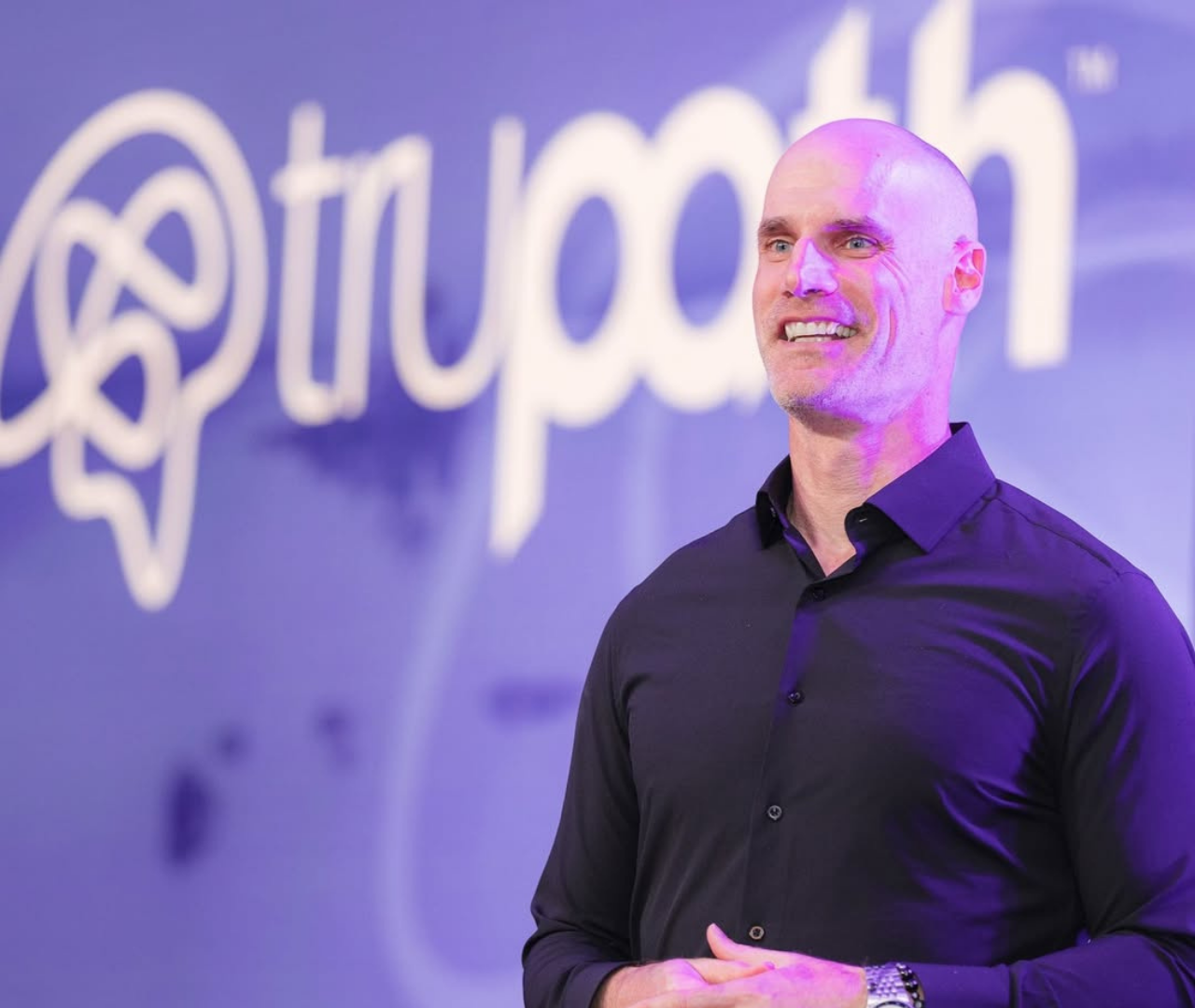
The work Steve does is heavily influenced by True Path, a company founded by Larry, a former Navy SEAL who was diagnosed with PTSD after retiring from the Navy. Larry has been researching this domain for over a decade, and the methodologies he's developed around understanding subconscious patterns and trauma responses have transformed how people approach identity work.
Practical Steps: How to Start Shifting Your Patterns
So how do you actually start recognizing and shifting these subconscious patterns?
Get Curious and Question Your Behavior
Start asking why. Not evolutionary questions about why the sky is blue, but questions about your own behavior. Why do you feel lonely at night when you're by yourself? Why do you think you need money for freedom? Why do you respond a certain way in specific situations?
"The hardest thing to question is one's own behavior. It'll be uncomfortable. It'll be uncomfortable as shit. But once you start doing that, that's the first step to realize there are some patterns in your life. Some patterns might be serving you. Some patterns might not be. And you have every right, every tool, every ounce of power in you to change the behavior loops that you're in. But you can't change a behavior loop if you don't know you're in one."
Pay Attention to Your Identity Statements
Start noticing how often you use absolute identity statements: "I am ___," "I need to do ___," "I have to be ___."
"As soon as we start taking these absolute stands of I am, I have to, I need to, we're taking away our own choice. We're not giving ourselves the ability to operate outside of that identity and therefore have vastly limited how we can show up in the world. Different environments are going to ask different things of us. And if we're not versatile humans, we're going to show up in those environments and not know how to act."
Recognize Your Lowercase t Truths
Start identifying where you're living in lowercase t truths: truths that feel universal to you but are actually lessons from specific traumatic events that you're applying inappropriately to new environments.
What hot stove lessons are you applying to kitchen sinks? What did you learn in one context that you're now using as a universal rule for your entire life?
The Letter That Changed Everything
Steve shared one final practice that recently changed his life: writing a letter to his younger self.
He picked a time in his childhood when he was struggling the most. For him, it was age five, when his parents were going through a divorce, there was violence in the house and the neighborhood, and he was scared.
"I picked one of the darker times and I wrote a letter to myself. I just told the kid what was real. Here's the thing: none of what you're seeing around you is your fault. None of what you're doing right now is wrong. You are safe. You are loved. And you've got some pretty cool shit coming down the road for you. You're going to meet some pretty cool people and you're going to do some things that you thought you were only dreaming about right now."
Writing that letter released identity and allowed him to ask a powerful question: if I had gotten this letter 25 years ago, how different would I be?
The answer was: really different.
"If the answer is really different, what's stopping me from being different today? The only answer to that question is me. If I have the power to write this letter, I have the power to rewrite the entire narrative of my life. And inside of doing that, I got true freedom. Screw money. I got all the freedom I need."
Steve admitted he was reluctant for months before finally sitting down to do it. He cried. It was powerful. But it showed him something crucial: the power to change his story was always in his hands.
Your Permission Slip to Rewrite Everything
The marketplace tells us we need to suffer to succeed. Society tells us money equals freedom. Our subconscious tells us we need to stay in our identity box to stay safe.
But none of that is capital T Truth.
Hard work and suffering are different. You can work toward your goals without sacrificing yourself. You can build wealth without becoming a slave to money. You can expand beyond your current identity without losing your safety.
The key is recognizing the loops you're in. The lowercase t truths you're living in. The "I am" statements that are limiting your potential. The hot stove lessons you're applying to kitchen sinks.
You already have the power within you. It's just about creating awareness and curiosity. It's uncomfortable work, but it's totally worth it.
Because true success isn't reaching some destination where you can finally stop grinding. True success is enjoying the ride wherever it leads, knowing that you're whole and complete exactly as you are, and that evolution is not just acceptable but necessary.
Ready to dive deeper into rewiring your subconscious? Listen to MW Podcast Episode 15: How to Rewire Your Subconscious Identity & Build Success with Steve Nagib. We discuss trauma patterns, the identity trap, money mindset, and Steve's work with True Path based on Navy SEAL research.
Start with these two practices: Notice your identity statements this week and write a letter to your younger self at a time when you were struggling most.
You're not here to stay busy. You're not here to suffer your way to success. You're here to walk your own journey with your own map and your own compass.
That's real freedom. And it's been yours all along.
Step out of survival mode and into your Perma-Rich Life.
Join my email list below to claim your first step toward alignment and receive the stories, tools, and rituals I only share with this community.
We hate SPAM. We will never sell your information, for any reason.
